
🎗️ The Fire Within: How Antioxidants Really Work (and Why More Isn’t Always Better)
October is Breast Cancer Awareness Month, and you’ve probably seen headlines or social posts claiming that “antioxidants fight cancer” or that “superfoods can prevent disease.”
Sounds empowering, right?
But in reality — nutrition is about balance, not magic bullets. That whole health topic I always bring up….
This month, let’s unpack what antioxidants really do, how oxidative stress connects to cancer risk, and why you can’t out-supplement biology — no matter how flashy the label or the promise.
🔥 The Firefighter Analogy: What Antioxidants Actually Do
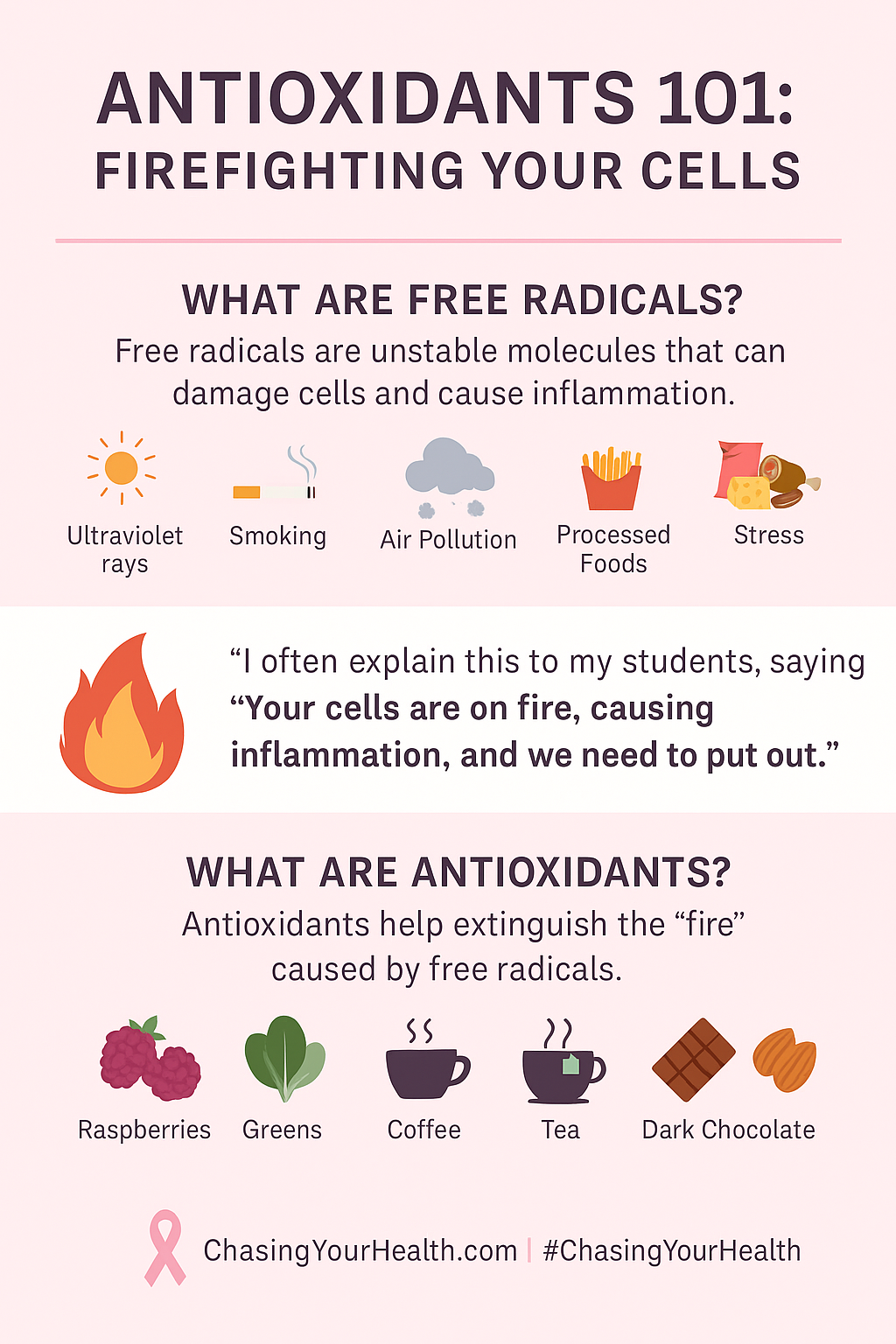
Every day, your body is like a power grid — cells burn fuel (food + oxygen) to keep the lights on. That process creates byproducts called free radicals — unstable molecules with unpaired electrons.
A little bit of this is normal and even useful. But when they build up (from stress, smoking, pollution, or poor sleep), they start attacking your cells — damaging DNA, proteins, and membranes.
That’s called oxidative stress, and it’s like sparks flying where they shouldn’t.
If it keeps going unchecked, those sparks can lead to chronic inflammation — a key player in diseases like:
🫀 Heart disease 🧠 Cognitive decline 🩸 Diabetes 🎗️ Cancer
Enter antioxidants.
They act like firefighters — safely neutralizing those free radicals before they spread damage.
But here’s the twist: just like real firefighters, they don’t eliminate all the sparks — your body actually needs some free radicals for cell signaling and immune defense. It’s about balance, not elimination.
💪 The Team Players: Key Antioxidants
Vitamin C – water-soluble defender that protects plasma and tissues
Vitamin E (α-tocopherol) – fat-soluble shield guarding your cell membranes
Carotenoids – (β-carotene, lycopene) protect against singlet oxygen
Polyphenols – found in tea, coffee, red wine, berries, and dark chocolate
Glutathione – the “master antioxidant,” made naturally inside your body
Did someone say red wine?? 🍷
Moderation still applies — but I’m convinced my wife’s polyphenol levels could power a small city. 😂
🧬 Glutathione — The Fire Chief (But Not the Miracle Pill)
Glutathione is your body’s built-in antioxidant powerhouse — made from amino acids (glutamine, cysteine, glycine) in nearly every cell, especially the liver.
It helps:
Neutralize free radicals
Regenerate other antioxidants (like Vitamins C & E)
Support detox pathways and immune function
But here’s the key message:
You can’t hack, supplement, or shortcut your way around biology.
Glutathione supplements haven’t been shown to prevent or treat cancer, and your body already produces it naturally when you’re well-nourished and supported.
Your cells want to stay balanced — they just need the right tools: quality protein, colorful produce, hydration, and sleep.
In other words: you can’t work against biology and expect to win.
Your body runs on synergy, not single ingredients.
💰 The Dr. Oz Era: When Antioxidants Went Hollywood
Then came the 2000s, when Dr. Oz turned antioxidants into miracle cures for everything from weight loss to cancer prevention.
Every week, a new “superfood” promised to melt fat, reverse aging, or make you immortal. 🍇🫐. One that always pops in my mind was he promoted raspberry ketones for weight loss and that product flew off the shelves, crazy how obesity is still an issue when he knew the magic cure… seriously cannot stand that man — every dietitian still twitches when someone says, “Well, Dr. Oz said…” 😬
The message? “If some is good, more must be better.”
The truth? That’s not how physiology works.
🧪 The Beta-Carotene Backfire
We are going to revisit this study because it fits the narrative so well. In the 1990s, two major trials (ATBC and CARET) tested whether β-carotene supplements could prevent lung cancer in smokers.
🚨 The result: those who took high-dose β-carotene actually had higher lung cancer rates.
Why?
In a high-oxidative-stress environment (like smoking), excess β-carotene switched sides — turning from antioxidant to pro-oxidant, doing more harm than good.
That study is one we’ve talked about before, and it perfectly proves the point:
When we try to override how the body naturally maintains balance, it backfires.
You can’t work against biology.
Antioxidants from real foods protect you; megadoses from pills can distort what your cells are designed to do. BALANCE!!
🌿 Whole Health: The Bigger Picture
This is where whole health comes in — the idea that nutrition, movement, sleep, stress, and mindset all work together to protect and restore balance.
You can’t isolate one piece of the puzzle and expect the full picture.
When you nourish your body consistently — not just with vitamins, but with rest, joy, connection, and purpose — your cells literally function better. This goes for weight loss as well, since we know many of us who think nutrition often relate it to weight loss.
Whole health improves:
Cell repair: Better nutrient delivery and reduced oxidative stress
Immunity: A balanced immune system that responds, not overreacts
Inflammation: Lower chronic inflammation through diet, movement, and sleep
Resilience: Your body’s ability to recover from stress — physical or emotional
Think of it like tending a garden: antioxidants are the nutrients in the soil, but whole health is the sunlight, water, and care that let everything thrive.
That’s why the “whole” in Chasing Your Health matters — because you’re not just treating cells, you’re cultivating an environment where healing can actually happen.
🥦 The Takeaway
🎗️ Antioxidants support health, but they don’t “cure” cancer.
🥗 Food first. Whole foods deliver the balance your body knows how to use.
💊 Supplements ≠ shortcuts. There’s no pill that replaces good nutrition, sleep, and lifestyle.
🌿 Whole health wins. Nourish your mind, body, and environment — it all works together.
🔥 Balance, not elimination. Your body needs some oxidative activity — it’s how cells communicate and adapt.
If you want to nourish your natural defenses, eat the rainbow, sleep well, move daily, and give your body a chance to breathe.
Because wellness isn’t about erasing the fire — it’s about keeping it controlled.
And that’s how you truly Chase Your Health. 🌿