

A full, evidence-based breakdown—with history, nuance, lived experience, and zero tolerance for revisionist nutrition.
If you spend any time online, saturated fat is either:
the villain behind every heart attack, or
the most unfairly persecuted nutrient of all time.
Both takes are wrong.
The reality is less dramatic—and far more supported by evidence. Saturated fat has been studied for decades. Nutrition science has evolved. Dietitians adapted long ago. And despite loud rebrands and confident rhetoric, the core science has not changed.
Let’s walk through:
what saturated fat actually is,
why full-fat dairy complicates the story,
the era when fat was demonized (and what we learned),
what decades of cardiovascular research still show,
how the new Dietary Guidelines are being misrepresented (see blog links below)
and which fats actually support heart health—and why.
What saturated fat actually is (science, not vibes)
Saturated fat is a type of fat with no double bonds in its chemical structure. That structure makes many saturated fats solid at room temperature.
Common sources
Dairy: butter, cheese, whole milk, cream
Animal fats: fatty beef and pork, bacon, sausage
Plant sources: coconut oil, palm oil
Why it matters: saturated fat reliably raises LDL cholesterol and ApoB, the lipoproteins most directly involved in atherosclerosis. This has been demonstrated repeatedly in controlled feeding trials.
Shortened Version
Eating a lot of saturated fat can raise LDL cholesterol in your blood.
LDL can stick to the inside of blood vessels, where it causes irritation and swelling.
Over time, this buildup can narrow the blood vessels and make it harder for blood to flow to the heart.
That’s why too much saturated fat can increase the risk of heart disease.
That mechanism isn’t controversial.
What is debated is how this plays out in real-world eating patterns.
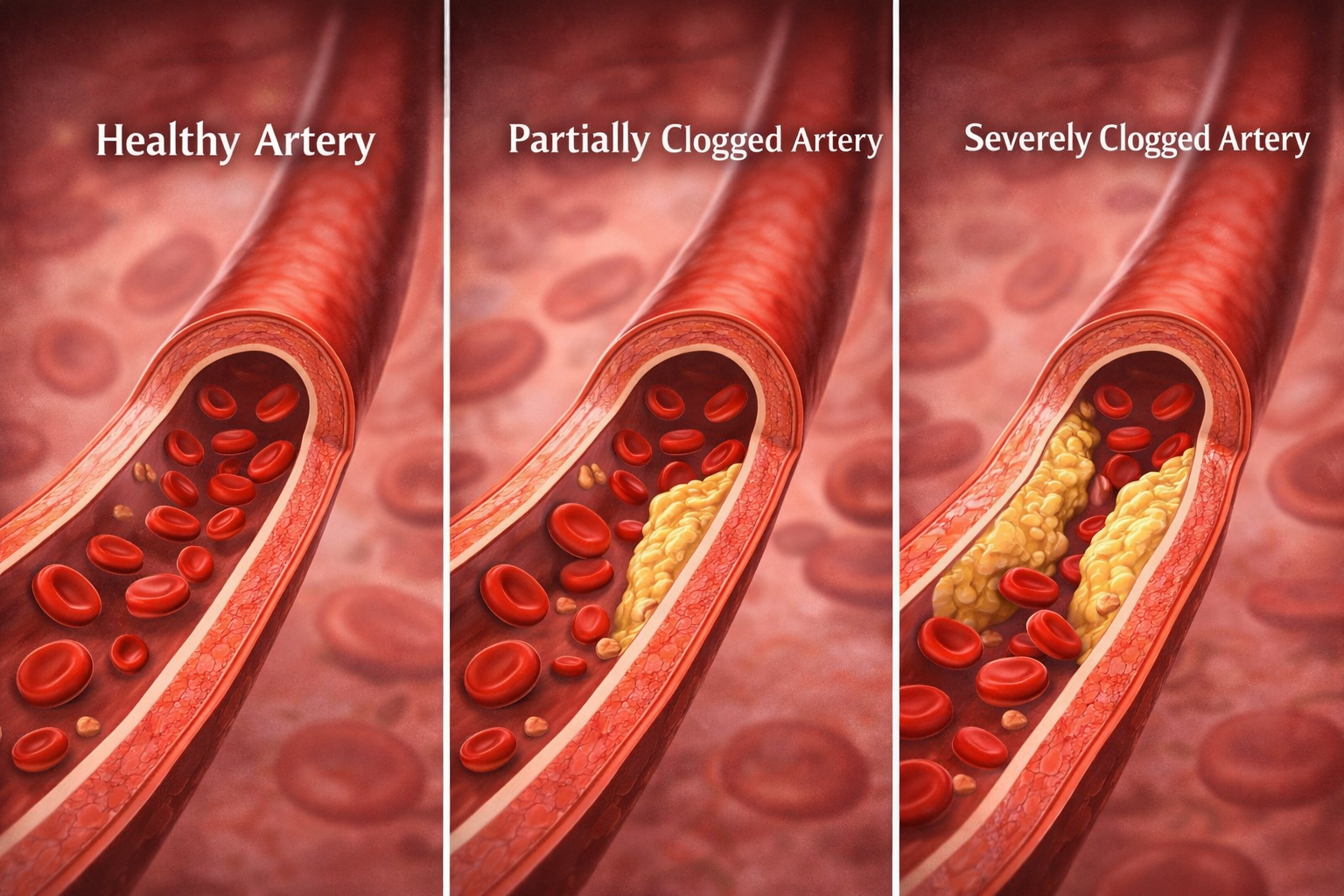
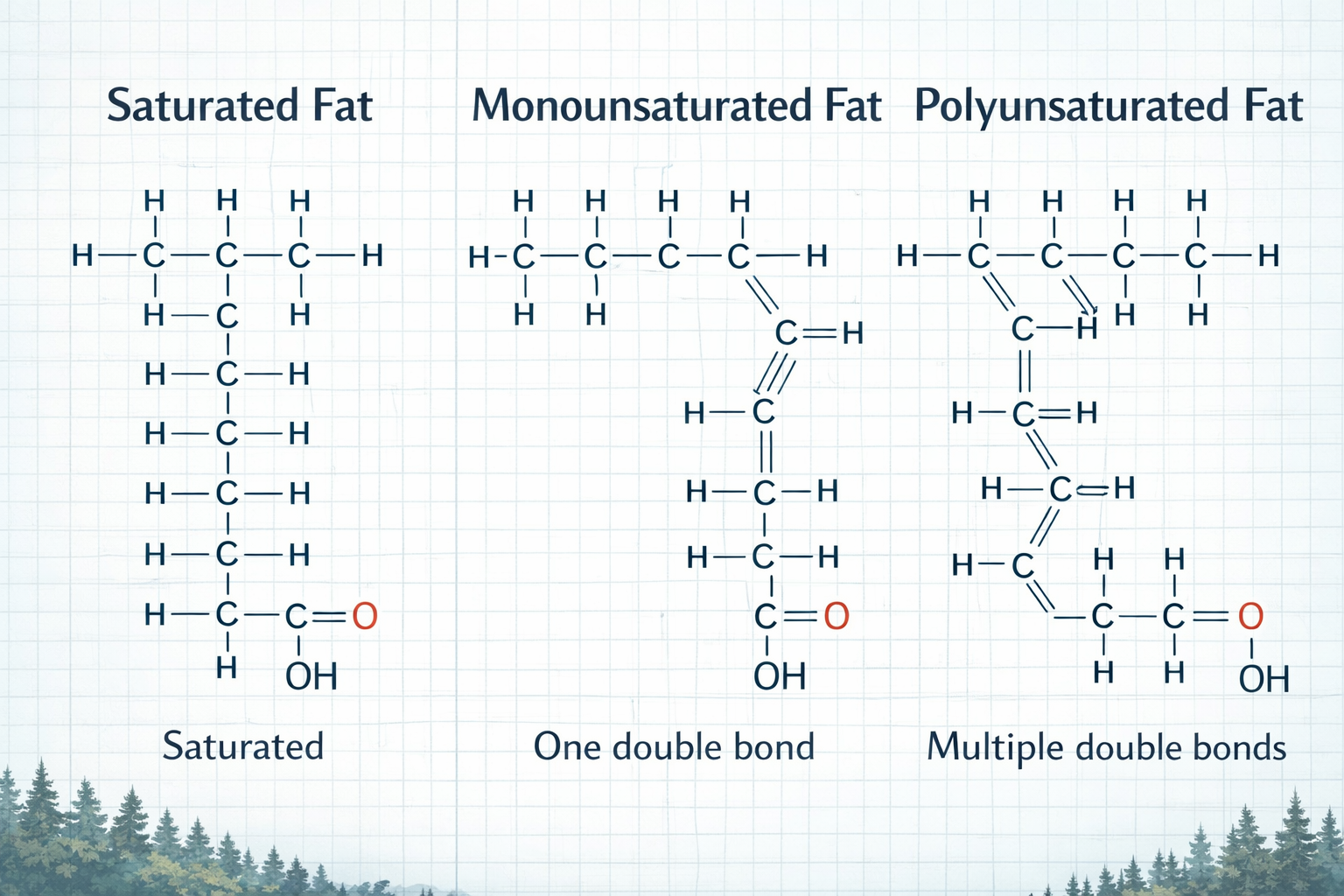
Chemical Makeup
Backtrack: Yes—fat was demonized
There was a time when fat—all fat—was treated like the enemy.
From the late 1970s through the 1990s, public-health messaging leaned hard into the idea that dietary fat was the primary driver of obesity and heart disease.
Enter the low-fat era:
fat-free cookies and crackers,
fat-free salad dressings loaded with sugar,
fat-free yogurt that barely resembled food,
and the belief that “less fat = better health.”
Calories from fat were emphasized.
Satiety (feeling full) was ignored.
Ultra-processed low-fat foods exploded.
That era got things wrong.
But here’s the key point that gets lost today:
👉 Nutrition science didn’t stop there.
Nutrition research evolved—and dietitians evolved with it
For over 30 years, dietitians and researchers have:
differentiated types of fat,
promoted unsaturated fats for heart health,
acknowledged fat’s role in satiety and metabolic health,
and moved away from blanket low-fat prescriptions.
Long before the rebrand, dietitians were already teaching:
olive oil over trans fats,
nuts and seeds as nutrient-dense foods,
fatty fish for omega-3s,
and—yes—even full-fat dairy in the right context.
That evolution didn’t come from politics or podcasts.
It came from better science. Shocker!
What fat actually does in the body (beyond calories)
Fat isn’t just “energy dense.” It plays real physiological roles:
Satiety: slows gastric emptying so you feel fuller longer
Blood sugar control: blunts post-meal glucose spikes when paired with carbs
Hormone production: many hormones depend on dietary fat
Vitamin absorption: vitamins A, D, E, and K require fat
Satisfaction & sustainability: food you enjoy is easier to maintain long-term
This is why extreme fat-free diets fell out of favor decades ago.
But here’s the part social media skips
Acknowledging fat’s benefits does not mean more is always better.
Context matters.
The person matters.
The goal matters.
A very real example: dairy and weight goals
If someone is:
trying to lose weight,
struggling with calorie balance,
or unknowingly over-consuming calories…
…and they’re drinking three gallons of whole milk per week, that’s not a fat-quality issue—it’s a calorie-density issue.
Whole milk is nutritious.
It’s also calorically dense (2400 calories in 1 gallon, 80 grams of saturated fat [5gm Sat Fat in 1 cup])
A smart, evidence-based adjustment might be:
switching to lower-fat milk or yogurt,
keeping protein, calcium, and vitamin D,
while reducing total calorie intake.
That’s not diet culture.
That’s practical nutrition.
Full-fat dairy may work well for some people. Lower-fat dairy may be the better tool for others.
Neither option is morally superior.
The nuance everyone argues about
When researchers look at whole foods (not isolated nutrients): milk, yogurt, and cheese (including full-fat versions) often show neutral associations with cardiovascular disease in large observational studies.
That does not mean dairy is heart-protective magic.
It means dairy behaves differently than butter or isolated saturated fat added to ultra-processed foods.
Why dairy looks different: the food-matrix effect
Dairy delivers saturated fat alongside:
calcium (which can reduce fat absorption),
fermentation (yogurt and cheese),
unique proteins and bioactive compounds,
the milk fat globule membrane.
This helps explain why yogurt and cheese don’t track the same way as other saturated-fat-rich foods.
This evidence does not mean:
saturated fat no longer matters,
butter is a heart food, or
everyone should switch to full-fat everything.
It means context matters more than grams alone.
What decades of research still clearly show
Here’s the most consistent finding in fat research:
👉 When saturated fat is replaced with unsaturated fat, cardiovascular events decrease.
Not just cholesterol markers. Actual heart attacks and coronary events.
That’s why organizations like the American Heart Association and the World Health Organization continue to recommend limits on saturated fat intake. AND so do the new guidelines but that seems to get mixed in their new branding….
Why people think the science is “mixed”
Because the replacement matters.
Replace saturated fat with:
❌ refined carbohydrates and sugar → benefit disappears
✅ monounsaturated and polyunsaturated fats → heart risk improves
Saturated fat does not exist in a vacuum.
The swap is the science.
“We’re fixing what the old guidelines got wrong”
(Except… they’re arguing against something we already fixed)
The new Dietary Guidelines are being sold as a bold correction to decades of “bad nutrition advice.” The implication is that older guidelines pushed ultra-processed foods, banned saturated fat, and caused today’s chronic-disease crisis.
That storyline is convenient. It’s also false.
The new guidelines were built on pyramids we’ve been LITERALLY roasting for 30 years
What they’re reacting against isn’t modern nutrition guidance—it’s old food pyramid models, particularly MyPyramid-era visuals.
Those pyramids were grain-heavy, abstract, and confusing. And we already abandoned them.
👉 They haven’t been the standard for over a decade
Notice what they don’t mention: MyPlate.
Since 2011, MyPlate has shown people how to build a balanced plate with real food:
half fruits and vegetables,
lean protein,
whole grains,
dairy or alternatives,
flexibility—not fear.
It doesn’t promote ultra-processed foods. It doesn’t ban saturated fat, in fact, dairy is part of the plate experience!
It doesn’t support the “everything before now was wrong” narrative.
So it gets ignored.
Same tactic, same result
Where I differ from RFK Jr and his team: They imply saturated fat was demonized and is now redeemed.
But here’s the reality:
👉 The saturated fat recommendation did not change.
It remains less than 10% of total calories.
If the science had flipped, the number would have flipped. IT DIDN’T!!
I need to say that again…. The percentage they recommend DID NOT CHANGE!!! So they still used the 2020-2025 guidelines. See how they left that out! They are building a narrative off of misinformation!
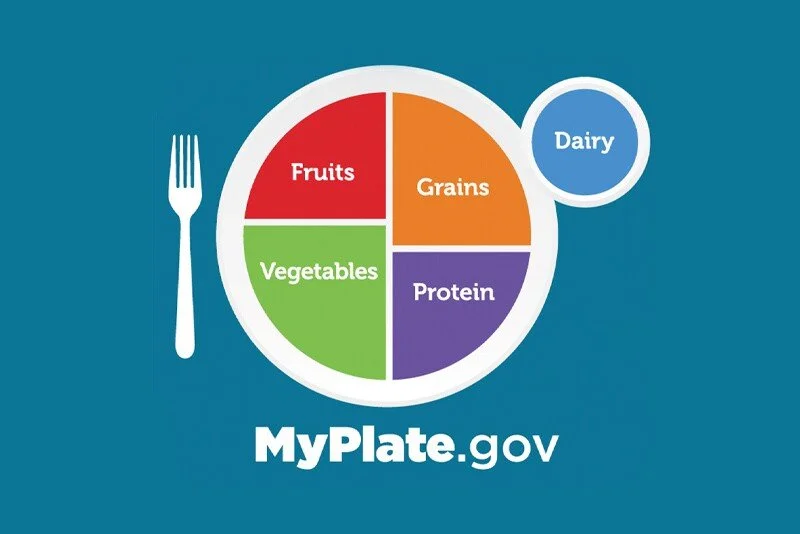
MyPlate 2011
A real-world reminder from early in my career
When I first started my dietitian career over a decade ago (yes—over a decade, since apparently that now grants extra authority in comment sections), I had a walk-in patient with a very specific demand.
He wanted a list of saturated fats. He was convinced the government was “taking saturated fat out of the cows.”
He was fired up. He was adamant.
And I’m sure—wherever he is today—he’s absolutely ecstatic right now.
But here’s the important part: My advice then is the same advice I give now
Despite all the noise, rebrands, and confidence campaigns, my clinical guidance hasn’t changed.
I told him then—and I tell patients now:
Saturated fat increases heart-disease risk when eaten in large amounts
It’s not banned or evil
But it shouldn’t be the foundation of your diet
And most importantly:
👉 A plant-forward eating pattern remains top dog for heart health.
That was true a decade ago. It’s true now.
The science didn’t suddenly change. Only the volume of misinformation did.
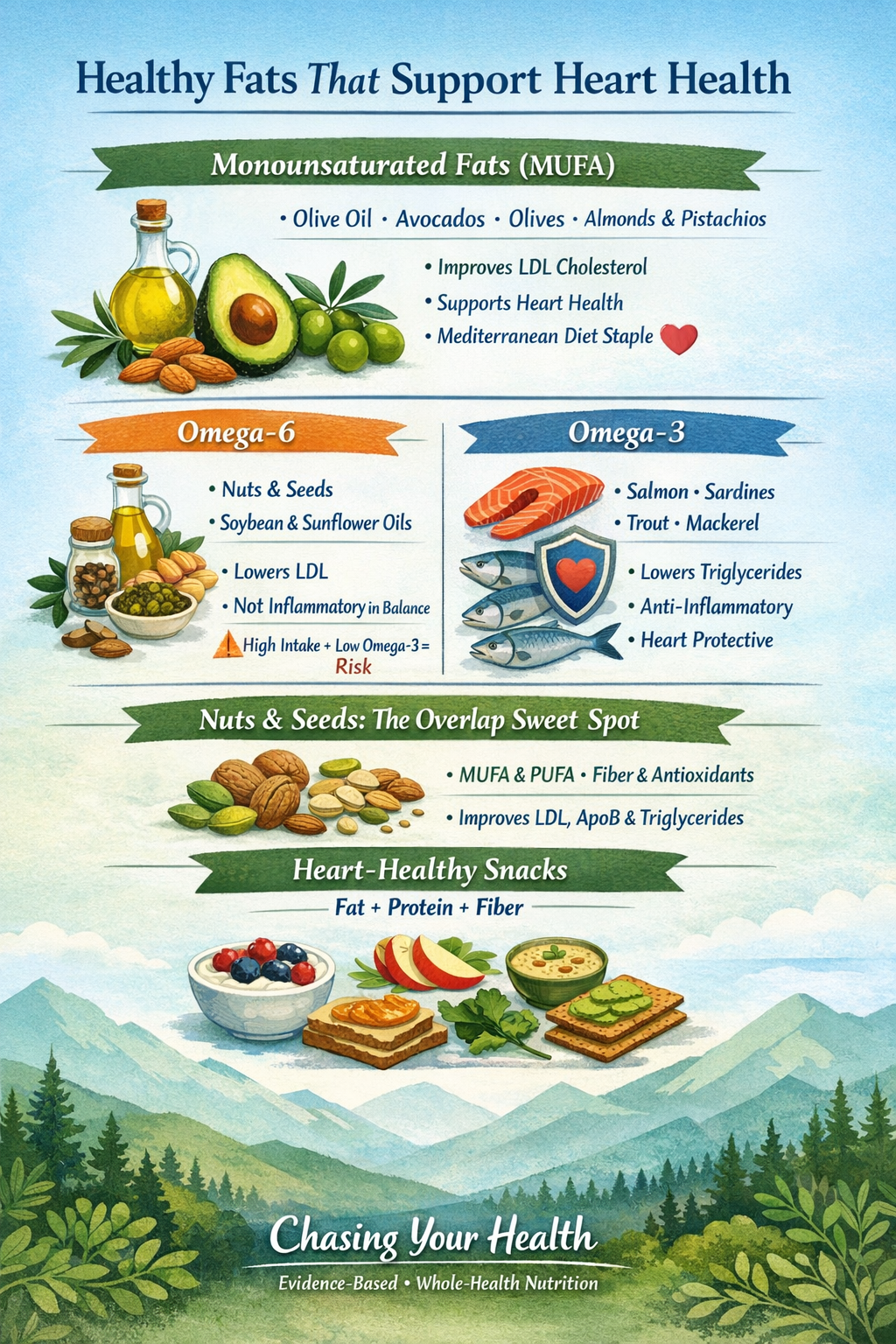
🫒 Healthy Fats That Support Heart Health
What to eat • Why it matters • How to use it
🟢 Monounsaturated Fats (MUFA)
Found in
Olive oil
Avocados
Olives
Almonds, pistachios
Why they help
Improve LDL cholesterol when replacing saturated fat
Support heart health & insulin sensitivity
Core of Mediterranean-style eating
🔵 Polyunsaturated Fats (PUFA)
Omega-6
Found in
Nuts & seeds
Soybean, sunflower, safflower oils (more on seed oils later)
What they do
Lower LDL cholesterol
Reduce coronary heart disease risk
Inflammation myth
❌ Not inflammatory in normal amounts
⚠️ Risk comes from very high intake + ultra-processed foods + low omega-3 intake
Omega-3
Found in
Salmon
Sardines
Trout
Mackerel
Why they matter
Lower triglycerides
Stabilize plaque
Support anti-inflammatory pathways
Linked to lower risk of fatal heart disease
🟣 Nuts & Seeds = The Overlap Sweet Spot
They provide:
MUFA + PUFA
Fiber
Plant sterols
Magnesium & antioxidants
Clinical trials show improvements in
LDL
ApoB
Triglycerides
(Best when replacing refined carbs or saturated fat)
🥣 Heart-Healthy Snack Formula
Fat + Protein + Fiber = Satiety
Snack ideas
Greek yogurt + berries + nuts/seeds
Apple + peanut or almond butter
Cottage cheese + flax or chia
Hummus + veggies
Trail mix (nuts + seeds, low sugar)
Whole-grain crackers + avocado + tuna or beans
✅ Bottom Line
MUFA & PUFA support heart health
Omega-6 ≠ the villain (imbalance is the issue)
Omega-3s are under consumed & protective - encourage more
Whole foods > isolated fats
Snacks should work with your body
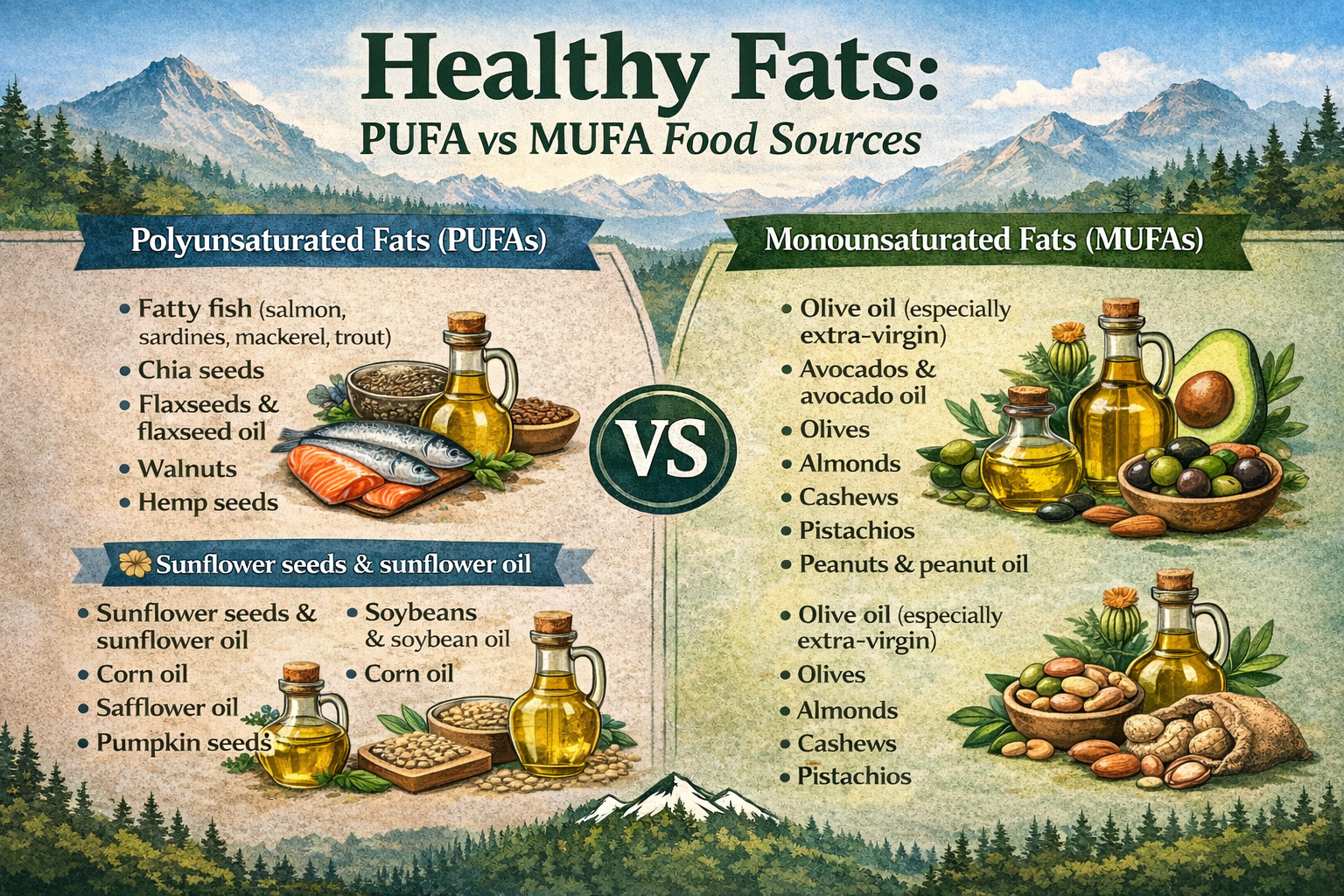
Healthy Fats
Putting it all together
✔ Fat was oversimplified decades ago
✔ Nutrition science evolved—and dietitians evolved with it
✔ Saturated fat raises LDL at higher intakes
✔ Replacing it with unsaturated fat improves heart outcomes
✔ Full-fat dairy can fit—but depends on the person
✔ Old pyramids were flawed and already abandoned
✔ MyPlate has guided real-food eating since 2011
✔ The <10% saturated fat guideline did not change
Final Chasing Your Health take 🏔️
You don’t need to fear fat. You don’t need to worship butter.
And you don’t need rebrands rewriting history.
Let fat support satiety and satisfaction.
Let unsaturated fats lead the way.
Let saturated fat stay in a supporting role—not the main character.
That’s not trendy.
That’s just evidence-based nutrition—still standing after all the noise.
On my next blog we will break down seed oils and what the new dietary guidelines recommends.
The Chasing Your Health Plate
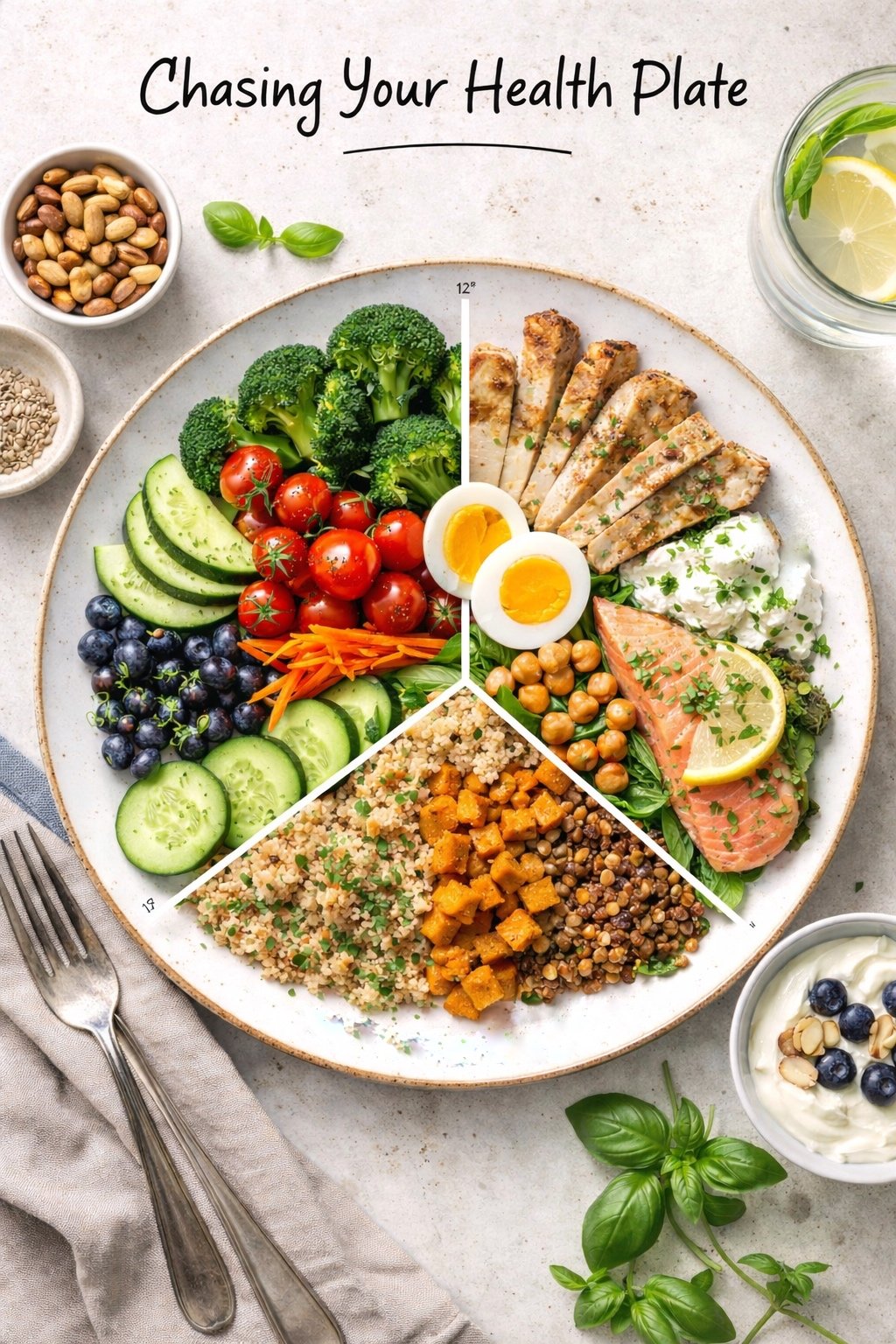
CYH Plate
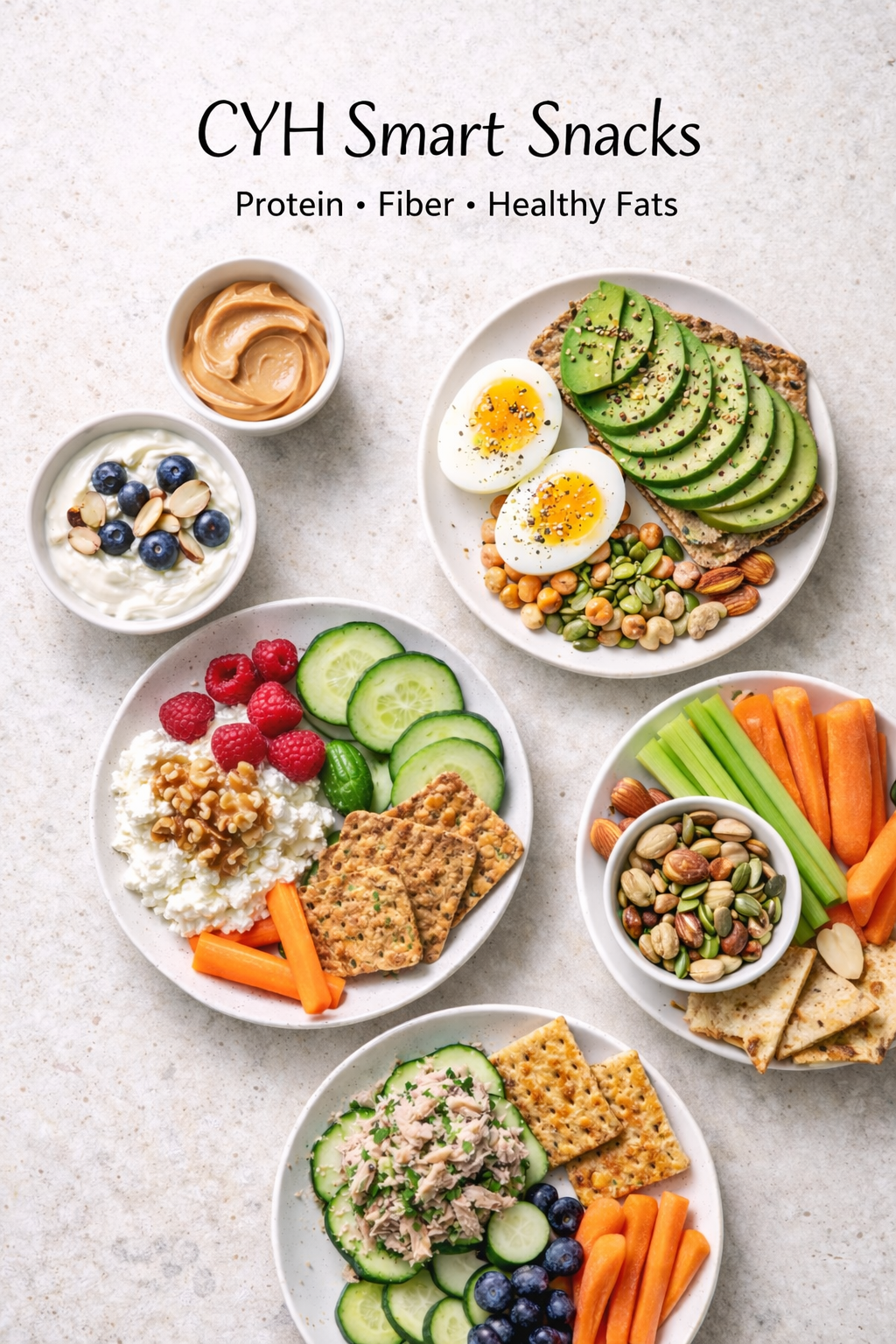
CYH Healthy Snacks
Scientific Evidence & Bibliography
1. Saturated Fat, LDL Cholesterol, and Cardiovascular Risk
These sources support the claim that saturated fat raises LDL/ApoB and increases cardiovascular risk when consumed in higher amounts, especially when replacing unsaturated fats.
Mensink RP, et al. (2003).
Effects of dietary fatty acids and carbohydrates on the ratio of serum total to HDL cholesterol.
American Journal of Clinical Nutrition, 77(5), 1146–1155.
→ Landmark meta-analysis demonstrating that saturated fat increases LDL cholesterol compared to unsaturated fats.Sacks FM, et al. (2017).
Dietary fats and cardiovascular disease: A presidential advisory from the American Heart Association.
Circulation, 136(3), e1–e23.
→ Comprehensive review concluding that replacing saturated fat with polyunsaturated fat lowers CVD events.Ference BA, et al. (2017).
Low-density lipoproteins cause atherosclerotic cardiovascular disease.
European Heart Journal, 38(32), 2459–2472.
→ Strong causal evidence linking LDL cholesterol to atherosclerosis.Hooper L, et al. (2020).
Reduction in saturated fat intake for cardiovascular disease.
Cochrane Database of Systematic Reviews, Issue 5.
→ Shows reduced cardiovascular events when saturated fat is reduced and replaced with unsaturated fat.
2. Replacement Matters: Unsaturated Fat vs Refined Carbohydrates
Supportsthe repeated emphasis that what replaces saturated fat determines outcomes.
Mozaffarian D, et al. (2010).
Effects on coronary heart disease of increasing polyunsaturated fat in place of saturated fat.
PLoS Medicine, 7(3): e1000252.
→ Replacing saturated fat with PUFA significantly lowers CHD risk.Li Y, et al. (2015).
Saturated fats compared with unsaturated fats and sources of carbohydrates in relation to CHD.
Journal of the American College of Cardiology, 66(14), 1538–1548.
→ Replacing saturated fat with refined carbs shows no benefit; replacing with unsaturated fat lowers risk.
3. Full-Fat Dairy & the Food Matrix
These support the nuanced position that full-fat dairy often shows neutral cardiovascular outcomes, likely due to the food matrix—not because saturated fat is irrelevant.
Astrup A, et al. (2020).
Dairy foods and health: An umbrella review.
Advances in Nutrition, 11(2), 371–383.
→ Dairy intake (including full-fat) is generally neutral or beneficial for cardiometabolic outcomes.Dehghan M, et al. (2018).
Association of dairy intake with cardiovascular disease and mortality (PURE study).
The Lancet, 392(10161), 2288–2297.
→ Observational evidence showing neutral or inverse associations for certain dairy foods.Guasch-Ferré M, et al. (2019).
Dairy fat biomarkers and risk of cardiovascular disease.
PLOS Medicine, 16(10): e1002899.
→ Certain dairy fat biomarkers not associated with increased CVD risk.Thorning TK, et al. (2017).
Dairy fat content and cardiometabolic health.
Advances in Nutrition, 8(4), 487–499.
→ Introduces the “food matrix” concept in dairy.
4. The Low-Fat Era & Historical Context
Supports the acknowledgment that fat was demonized during a specific historical period.
US Senate Select Committee on Nutrition (1977).
Dietary Goals for the United States.
→ Early policy document emphasizing fat reduction.Willett WC, et al. (1998).
Dietary fat intake and the risk of coronary heart disease.
American Journal of Clinical Nutrition, 68(5), 1145–1155.
→ Early critique of blanket low-fat recommendations.Taubes G. (2001).
The soft science of dietary fat.
Science, 291(5513), 2536–2545.
→ Historical review of fat demonization and policy missteps.
5. Role of Fat in Satiety, Metabolism, and Nutrient Absorption
These support the section on what fat actually does in the body.
Blundell JE, et al. (2010).
The control of appetite and energy intake.
Physiology & Behavior, 100(5), 525–534.
→ Fat contributes to satiety via gastric emptying and hormonal signaling.Melanson KJ, et al. (2009).
Dietary fat intake and satiety.
Nutrition Reviews, 67(8), 460–469.Ross AC, et al. (2011).
Dietary reference intakes for calcium and vitamin D.
National Academies Press.
→ Fat-soluble vitamin absorption (A, D, E, K).
6. Plant-Forward & Mediterranean-Style Diets
Supports the repeated statement that plant-forward eating patterns remain “top dog” for heart health.
Estruch R, et al. (2013; updated 2018).
Primary prevention of cardiovascular disease with a Mediterranean diet.
New England Journal of Medicine, 368, 1279–1290.
→ Mediterranean diet with olive oil or nuts reduced major cardiovascular events.Satija A, et al. (2017).
Healthful and unhealthful plant-based diets and CHD risk.
Journal of the American College of Cardiology, 70(4), 411–422.Dinu M, et al. (2017).
Vegetarian, vegan diets and cardiometabolic risk.
Critical Reviews in Food Science and Nutrition, 57(17), 3640–3649.
7. Current Dietary Guidelines & Saturated Fat Limits
Supports the assertion that the <10% saturated fat recommendation has not changed.
U.S. Department of Health and Human Services & USDA (2010–2020).
Dietary Guidelines for Americans.
→ Saturated fat limit consistently set at <10% of total calories.World Health Organization (2018).
Draft guidelines on saturated fatty acid and trans-fatty acid intake.
→ Recommends limiting saturated fat to <10% of energy intake.