
Metabolic Flexibility (Short Version)
By Chase Merfeld, MS, RDN, LN, CSR
ChasingYourHealth.com
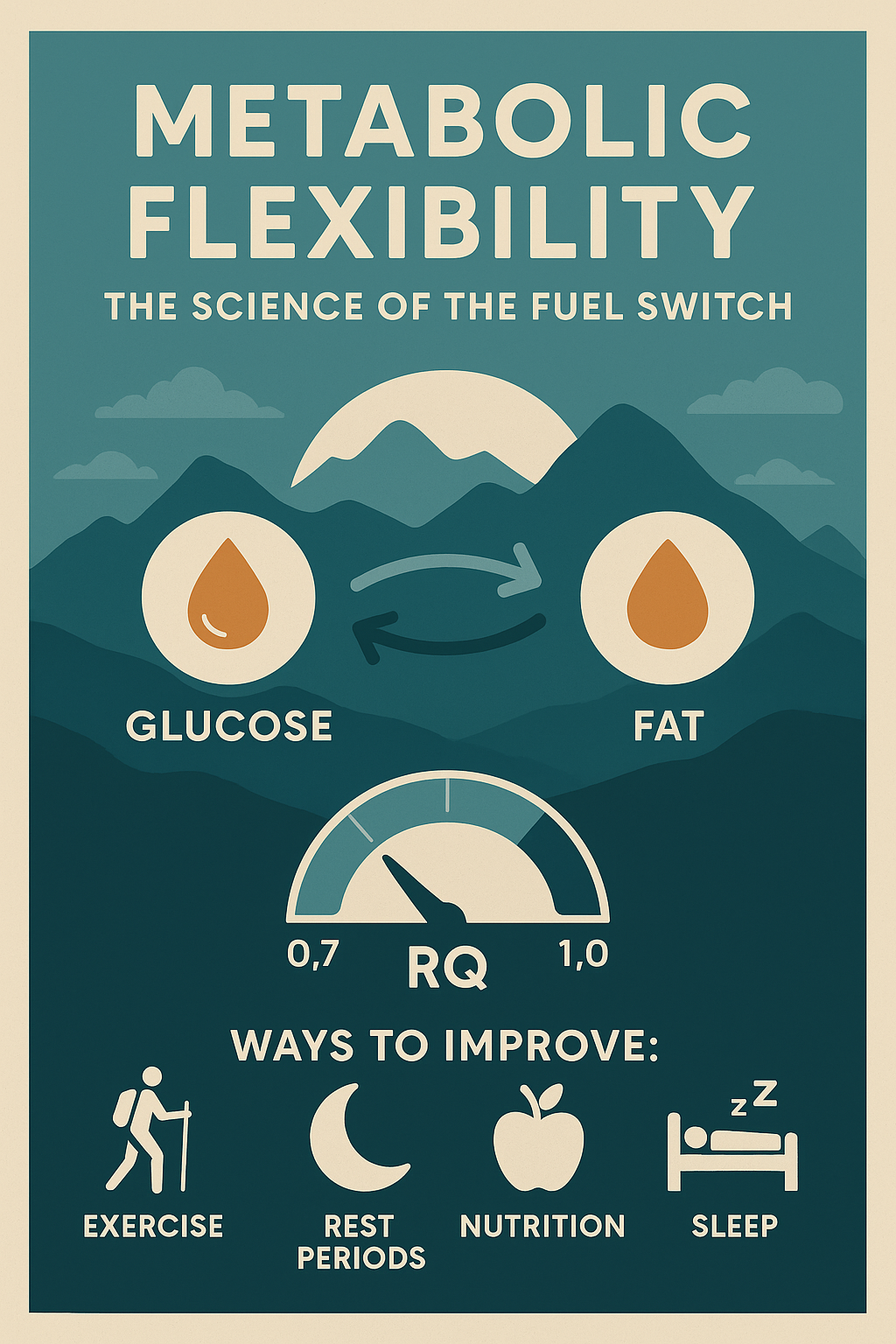
🌄 What Is Metabolic Flexibility?
It’s your body’s ability to switch between fuel sources:
Carbs → glucose after meals
Fat → fatty acids between meals
Glycogen → backup glucose during transitions
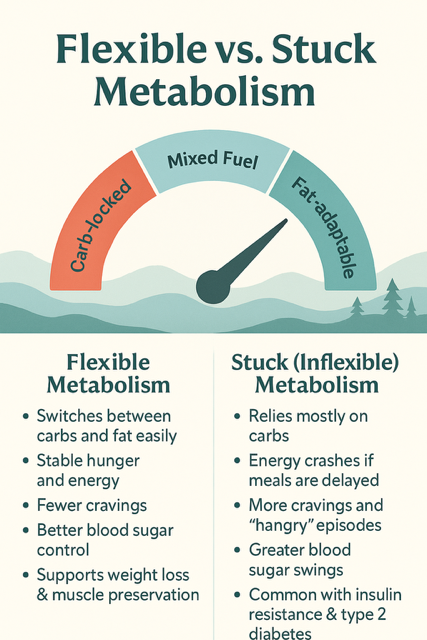
A flexible metabolism adapts.
An inflexible one crashes, craves, and gets “stuck.”
🧠 Flexible vs. Inflexible Metabolism
”why it matters”
🍽️ How Macros Support Flexibility
Carbs
Refill glycogen → support activity → help transition into fat-burning later.
Healthy fats
Keep energy steady between meals → support fat oxidation.
Protein
Protects muscle → improves insulin sensitivity → reduces cravings.
Balanced meals support smooth fuel switching.
Extremes disrupt it.
🟡 Glycogen: The Fuel Bridge
Stored in your liver and muscles, glycogen lets you move from carb-burning → fat-burning without crashing.
Healthy glycogen = easier fasting, steadier energy.
⏳ Intermittent Fasting
Fasting doesn’t magically create flexibility — it reveals it.
If fasting feels stable → flexibility is good.
If fasting feels miserable → the fuel switch is impaired.
Gentle fasting (12–14 hours) improves insulin rhythm and supports fuel switching.
Extreme fasting raises muscle-breakdown risk.
💉 Diabetes & Fuel Rigidity
In type 2 diabetes:
insulin stays high
fat-burning is suppressed
glycogen cycling is disrupted
energy swings become more intense
This is “metabolic inflexibility,” and it can improve with lifestyle changes.
🔥 How Flexibility Helps With Weight Loss
Better access to stored fat
Fewer cravings
Stable energy during calorie deficit
Better exercise performance
Protection of muscle mass
Flexibility doesn’t replace calorie balance — it makes it easier.
💪 How to Protect Muscle During Fasting
Eat 1.2–1.6 g/kg/day protein
Strength train 2–4x/week
Use gentle fasting windows
Sleep well + manage stress
Eat balanced meals with protein + fiber + healthy fat
Fasting should burn fat, not muscle.
🌱 Why Balanced Eating Improves Flexibility
Balanced meals:
stabilize blood sugar
support glycogen stores
protect muscle
improve fat oxidation
reduce cravings
prevent the body from entering “fuel panic mode”
Balance → signals your metabolism that you are safe → fuel switching improves.
🧬 Flexibility & Longevity
Better fuel switching supports:
mitochondrial health
lower inflammation
steadier glucose
preserved muscle
healthier aging pathways (AMPK, SIRT1)
A flexible metabolism ages better.
🧪 How It’s Actually Measured
Only two validated methods:
Indirect calorimetry (RER/RQ)
Hyperinsulinemic–euglycemic clamp
CGMs cannot measure metabolic flexibility — they only show glucose response.
🧘 Whole-Health Habits That Build Flexibility
Balanced meals
Walking after meals
Strength training
Meal spacing (3–4 hours)
Gentle fasting (12–14 hrs)
Sleep
Stress reduction
Hydration
Supportive environment
Consistent routines
Small, consistent habits → a more flexible metabolism.
🧠 My RD Take
Metabolic flexibility isn’t about perfection or extremes — it’s about supporting your body so it can adapt smoothly.
Every walk, every balanced meal, every night of sleep, every stress-reducing moment signals safety to your metabolism.
A flexible metabolism is a resilient metabolism — one that supports energy, weight, blood sugar, and long-term health.
📌 One-Sentence Takeaway
Metabolic flexibility is your body’s ability to switch fuels smoothly — and it’s one of the most important foundations of energy, blood sugar control, weight regulation, and longevity.