
🍓 The Dirty Dozen: Are We Scaring Ourselves Away From Healthy Foods?
“Are pesticides actually dangerous—or are we missing the bigger picture?”
💥 Reality Check (Quick Take)
If you came here thinking,
“Just tell me if I should be scared of my groceries…”
Say less. Here’s the quick version 👇
The “Dirty Dozen” highlights detectable pesticide residues—not dangerous levels
Washing fruits and vegetables reduces residues significantly
Pesticides serve a real purpose in food production
Organic vs conventional is about preference—not safety
Fear-based messaging may actually reduce healthy eating
💥 Chasing Your Health Take: If the Dirty Dozen scares you away from fruits and vegetables… it’s doing more harm than good.
🧠 What Is the Dirty Dozen?
The Dirty Dozen is released each year by the Environmental Working Group (EWG).
It ranks produce based on pesticide residues detected—even after washing.
Common foods include:
Strawberries
Spinach
Kale
Apples
Grapes
Peaches
At first glance, it sounds like a warning. And that’s exactly why it spreads so fast.
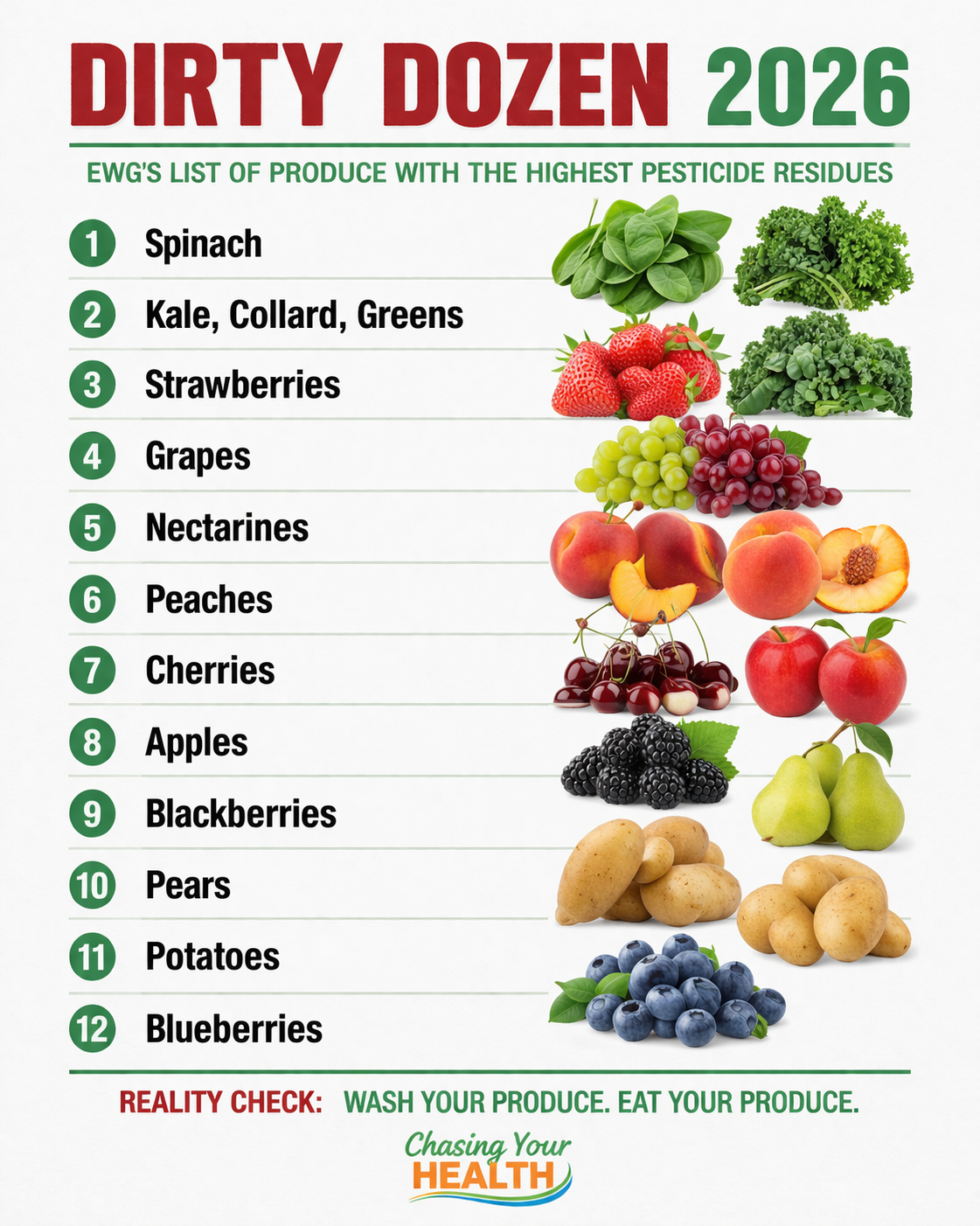
2026 EWG’s “Dirty Dozen”
⚠️ Detection Does NOT Mean Danger
The Dirty Dozen is based on detection, not risk.
Modern testing can detect pesticide levels in extremely small amounts—like a drop in an Olympic-sized swimming pool.
So yes… residues are present. But present ≠ harmful.
🌱 Why Do We Use Pesticides?
This is the part that often gets ignored.
Pesticides help:
Protect crops from insects, fungi, and disease
Reduce food waste
Improve crop yield and consistency
Keep food more affordable and accessible
💥 Reality Check: Feeding millions of people isn’t simple. We all want fewer chemicals in our food—but we also want affordable, accessible, year-round options. You don’t get both perfectly.
So pick your priority… and wash your produce.
Without them, we’d likely see:
Higher food prices
Less availability of produce—many foods wouldn’t even make it to store shelves
More crop loss
⚖️ Can We Acknowledge the Concern… and Still Be Realistic?
Let’s meet in the middle.
No one is saying: “Yeah, we want pesticides in our food.”
Of course we don’t.
In a perfect world, food would be:
Completely residue-free
Grown without crop loss
Affordable and accessible
💥 But that’s not the world we live in.
🌍 What Happens If We Remove Pesticides?
If pesticides disappeared tomorrow, we’d likely see:
📉 Lower Crop Yields
More crops lost to pests and disease.
💸 Higher Food Costs
Less supply = higher prices.
🗑️ More Food Waste
Shorter shelf life and increased spoilage, Especially for lower-income communities.
🥦 Less Access to Healthy Foods / whole foods
🧠 The Trade-Off No One Talks About
So here’s the real question: 👉 Are we trying to eliminate all risk? Or manage it in a way that supports overall health?
Because right now:
Pesticide exposure from food = low + regulated
Not eating enough fruits and vegetables = major health risk
💥 That’s the trade-off.
⚖️ The Roundup & Wheat Controversy (Let’s Talk About It)
We can’t ignore where some of this fear comes from.
In one widely publicized case, a groundskeeper was awarded damages after alleging glyphosate contributed to his cancer.
It’s important to note—this involved chronic, high-level occupational exposure, not typical dietary intake from food.
If you’ve heard headlines claiming cereals or wheat products are “toxic”… this is where that narrative came from.
Products containing glyphosate herbicide—likeRoundup herbicide—have been widely debated.
Here’s where things got confusing:
The International Agency for Research on Cancer classified glyphosate as “probably carcinogenic”
Meanwhile, the U.S. Environmental Protection Agencyand European Food Safety Authority found it not likely carcinogenic at typical exposure levels
👉 The difference comes down to:
Hazard vs risk
Study design
Real-world exposure
💥 Reality Check: A debated chemical in agriculture does NOT equal dangerous levels in your food.
🔬 What the Science Actually Says
Organizations like the U.S. Food and Drug Administrationand EPA set strict limits with large safety margins.
Research shows:
Residue levels are far below harmful thresholds
Washing reduces exposure further
Higher fruit and vegetable intake improves long-term health
💥 Translation: You’re far more at risk from avoiding produce than from eating it.
🧪 What About the “Research” EWG Cites?
The studies linked by EWG are real—but often misunderstood in context.
Most fall into these categories:
Observational studies
Animal studies
High-dose exposure models
Occupational exposure studies
⚠️ The Key Issue: Hazard vs Risk
Just because something can cause harm (hazard)
does not mean it will at typical exposure levels (risk).
💥 In toxicology: The dose makes the poison.
🧠 Reality Check on These Studies
Farm worker exposure ≠ dietary exposure
High-dose animal studies ≠ real-life intake
Detection ≠ danger
💥 This isn’t fake science—it’s incomplete context.
🧼 Yes—Washing Works
Rinse under running water
Scrub firm produce
Skip expensive produce washes
Simple. Effective. Done.
🥦 Organic vs Conventional: Let’s Actually Break This Down
This conversation gets oversimplified fast.
It’s usually framed like:
Organic = good
Conventional = bad
That’s not reality.
🌱 What Does “Organic” Mean?
Regulated by the United States Department of Agriculture:
Uses approved pesticides (yes, still pesticides)
Limits synthetic chemicals
Follows specific farming practices
💥 Organic ≠ pesticide-free.
🧪 Conventional Farming
Uses synthetic pesticides to:
Increase yield
Reduce loss
Keep food affordable
Regulated by:
U.S. Environmental Protection Agency
U.S. Food and Drug Administration
🔬 Nutrition Differences?
Minimal.
Eating fruits and vegetables matters far more than which version you choose.
⚖️ Exposure Differences?
Organic = lower residues
Conventional = safe, regulated levels
💥 Lower ≠ dangerous.
💸 Real-World Impact
Organic is often:
More expensive
Less accessible
And pushing “organic or nothing” can reduce produce intake. That’s a bigger problem.
🍽️ Chasing Your Health Take
✔ Eat more fruits and vegetables
✔ Wash them
✔ Buy organic if you want
✔ Buy conventional if it works
💥 The best diet is the one you can stick to.
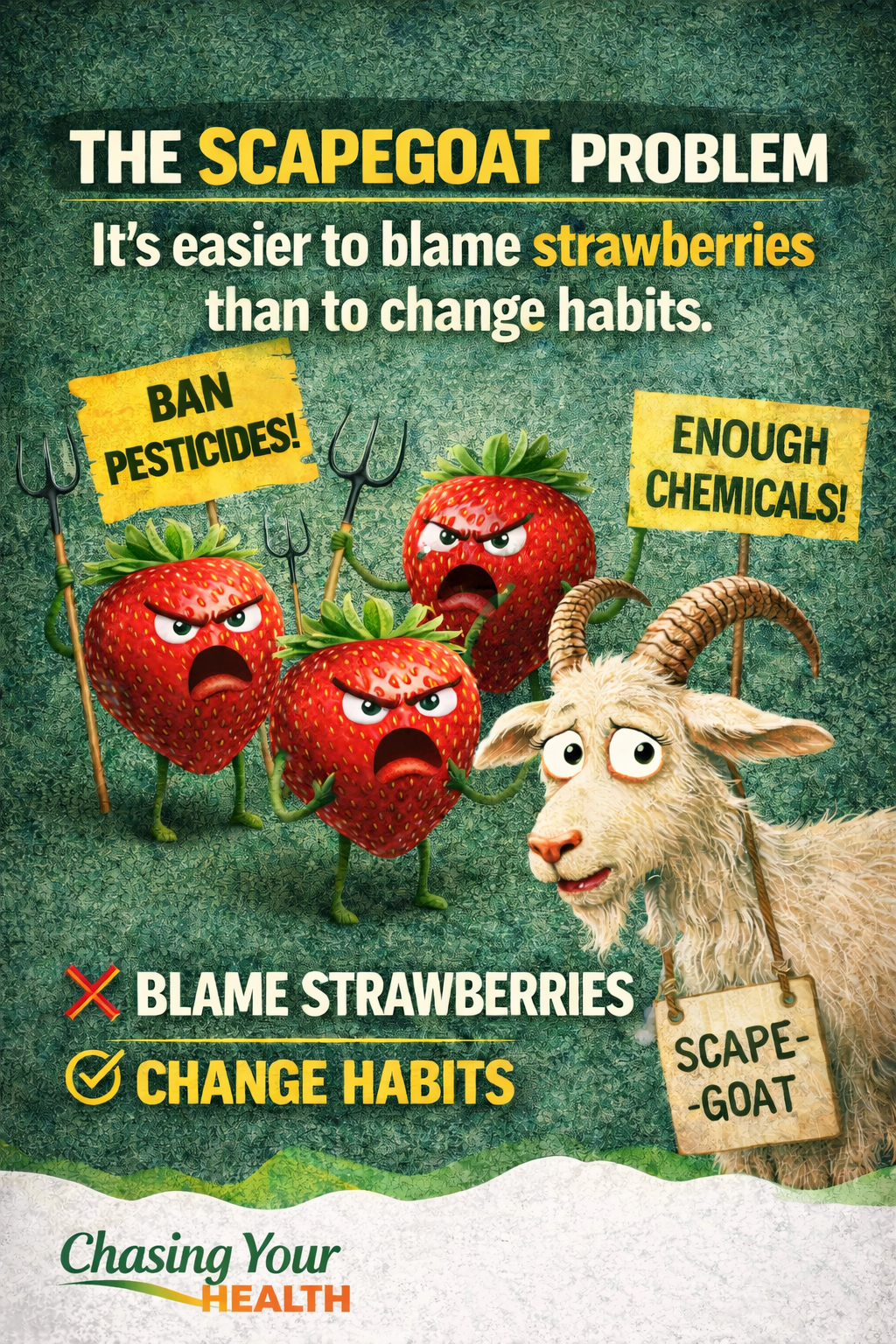
🚨 The Scapegoat Problem
Let’s be honest. People are always looking for a scapegoat to avoid eating healthy foods.
If it’s not carbs, it’s fats.
If it’s not fats, it’s sugar.
Now it’s pesticides.
💥It’s easier to blame strawberries… than to change habits.
🧠 Big Picture: Risk vs Benefit
Eating fruits and vegetables is linked to:
Lower heart disease risk
Reduced cancer risk
Better weight management
Improved gut health
Pesticide exposure from produce:
Is minimal
Is regulated
Has no strong evidence of harm at typical intake levels
😏 Let’s Be Real
If we’re going to panic about something… it’s probably not spinach.
It’s:
Ultra-processed food patterns
Overconsumption
Stress
Sleep
But sure—let’s blame the kale.
🎯 Final Takeaway
You don’t have to love pesticides. But you should understand the role they play.
Because scapegoats don’t improve your health.
Habits do.
Eat the apple.
Eat the strawberries.
Eat the damn vegetables.